
From the Wikipedia: Umbrella

It’s raining today in midtown Manhattan. Forgive me if you’ve already heard any of my umbrella-inspired fury on other rainy days via Twitter. Here’s this edition:

From the Wikipedia: Umbrella

Umbrellas have existed for protecting the human head from both sun and rain since at least the 5th century BCE. Some form of umbrella existed in ancient times in Europe, East Asia, South Asia, Asia Minor, Africa and the Americas. If Aboriginal Australians also developed a form of portable head-protecting canopy, the Wikipedia is not aware of it.

In early times, umbrellas were normally associated with wealth or status, and umbrellas were rarely carried by the people they were meant to protect.

This tradition is boldly maintained today by Sean “Diddy” Combs, whose umbrella man probably had to suffer through the recording of the single worst rap performance of all time on “Come With Me.”

Umbrellas, like most things not named “the Bubonic Plague,” were hard to find in the Dark Ages in Europe. According to the Wikipedia, cloaks were the most popular method of personal weather-protection in the era.

Umbrellas today principally serve both their intended purpose and a second, ancillary function: pissing me off.

Look: An umbrella is a great way to protect yourself from the elements if you get caught in the rain in some open space. But in urban centers, people should be required to have licenses to carry umbrellas.

Honestly, you wouldn’t think it should be that hard to understand that, when carrying an umbrella, you take up a lot more space than you normally do. I mean, the whole point of the umbrella is that it extends beyond your person in every direction, assuming you’re not fatter than your umbrella.

But no. People just keep walking as if they’re unencumbered by umbrellas, as though they’re occupying only their usual diameter. And umbrellas are almost always soaking wet, so when people bump into you with their umbrellas while they’re carrying an umbrella and you’re not, you get doubly soaked.

And to make matters worse, umbrellas are armed with pointy things at just about every extremity, so it’s not like those of us who are left without umbrellas, walking around avoiding umbrellas, are every diving out of the way of getting our eyes poked out by cotton balls.

If you’re carrying an umbrella, you absolutely must watch where you’re going, for the good of humanity. A good rule of thumb: If when you’re looking forward, you see only the inside of your umbrella, you’re carrying your umbrella too low.

And once your umbrella is held at an appropriate level to accommodate your vision, consider the people walking toward you on the crowded sidewalk. If the person isn’t much taller than you, a good method is to raise up your umbrella as you pass him by, avoiding his head and providing him with a brief bit of umbrella coverage, to boot.

If the person is too tall for that, then gently move your umbrella away from him. This is tricky, of course: Be aware of any other passersby that could be in your general vicinity before any umbrella adjustments.

And please: NO SUDDEN MOVEMENTS! It’s difficult enough for people coming your way or trying to pass you to predict how you’re going to be walking when you’re not carrying a pointy, three-foot wide weapon.

Good lord. Just be considerate, that’s all.

And with that, I’m off to walk to Grand Central Station in the rain, without an umbrella.
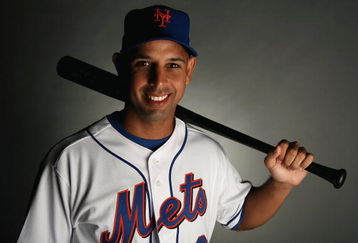
Closing on Cora

The Mets are reportedly close to a one-year deal with Alex Cora worth about $2 million.

I’ve said my piece on Cora, and I’m not out to repeat myself any more than I already do.

Instead, I’ll turn it over to “Hit the Weights Zeile,” a commenter on MetsBlog who put it pretty clearly:

Not worth 2 million. This team just can never figure this out but if you give out 3-4 contracts like this to guys who simply arent good you couldve used that money for useful parts. Cora’s production can be replaced for a fraction of that contract.

As they say on the Internet: This.

It’s nothing against Cora. It’s something against guaranteeing Cora $2 million.

And it’s nothing against making Cora and Elmer Dessens the first two offseason acquisitions. The Mets entered the offseason needing depth in the middle infield and the bullpen.

It’s about allocating resources where they do not need to be allocated. It’s about promising a roster spot — and remember, this front office rarely gives up on sunk costs until long after it should — to a guy who should be competing for one.

And it’s about committing to a guy to fill a need that might be filled more adeptly by a non-tendered free agent before anyone is certain who will be non-tendered.

I’m sick of making this argument, and I have a feeling I’m not going to change anyone’s mind anyway. The bottom line is that Cora won’t prevent the Mets from competing in 2010 or beyond, but he’s not likely to help them either.

I used to work with a really awesome guy who wasn’t very good at his job. People would complain about his various inabilities all the time, and then they’d inevitably punctuate their complaints with, “But hey, great guy.” So here’s that for Alex Cora:

But hey, great guy.

Talking Shoppach

D.J. Short absolutely nails it for NBC Sports: The Mets would be silly to shell out a multi-year deal for Bengie Molina when Kelly Shoppach could be non-tendered by the Indians.

Check it out: Even in Shoppach’s down year in 2009, he posted a 98 OPS+ to Molina’s 86.

Shoppach played nearly a full-time role for the Indians in 2008 when Victor Martinez was struggling with injury, but apparently the Indians are content to make due with Wyatt Toregas and Lou Marson while they await the arrival of Carlos Santana, whose songs all sound the same.

Shoppach’s not the world’s best defender behind the plate, but neither is Molina. And Shoppach is six years younger.

He might not have Molina’s Major League track record, but he’s almost certainly a better bet moving forward.

Plus, he looks just a tiny bit like Todd Pratt.

NFL talent scouting continues to underwhelm

Interesting piece on Drew Brees in the Times today from Judy Battista. Battista details Brees’ history of being told he was too short to play quarterback and examines some of the perceived limitations for short quarterbacks in the NFL.

The money quote comes from a former Cowboys executive who developed a computer program that concluded NFL quarterbacks must be at least 6-foot-1:

“Brees is a 1-in-100 guy. If you look around, the quarterbacks that are playing the best, they’re all at least 6-3.”

Well, yeah, but if you’re unwilling to draft quarterbacks below 6-foot-1, then, ahh, you know.

Drew Brees was excellent in high school, then he was excellent in college, then he surprised everyone by being excellent in the NFL.

I feel like the NFL’s talent scouting system is pretty terrible across the board. A lot of that has to do, I think, with the nature of the sport: No football player ever plays in isolation; his success inherently depends on that of his teammates.

But it seems like there’s way too much emphasis on size and combine numbers and not nearly enough on ability to play football.

My colleague Mike Salfino loves to point out that an NFL draft selection has only a 47 percent chance of having a better career than the next player selected at his position. It’s an interesting point.

Someone thought Vernon Gholston would be good. Someone thought Kurt Warner should be bagging groceries. Everyone needs to pay more attention to what happens on the field.

Items of note

Tom Singer at MLB.com hits on a point I’ve touched on before about how and why the league’s free-agent market is changing.

Mark Sanchez played a big game of red-light, green-light with Rex Ryan yesterday, and it appeared to work out.

The legend of Ike Davis is growing. Both Darryl Strawberry and Ike’s dad contribute.

Lawrence Frank was the longest-tenured coach in New York. Now he’s the most recently unemployed, and the Nets are 0-17.

The following trailer comes courtesy of Brett from SNY promos. I have nothing to add: